Concrete Foundations & Footings
Structural concrete work built to support your project for generations.
Why Your Foundation Matters Most
Your foundation is literally what everything else rests on. A quality foundation provides stable support for your entire structure, distributes loads evenly to the soil, resists settling and movement, and protects against moisture and ground-level issues. When a foundation is built right, you never think about it. When it's built wrong, you deal with problems for the life of the structure.
Foundations and footings work together as a system. Footings spread the building's weight over a larger area of soil, preventing excessive settlement. The foundation walls or slab sit on these footings and transfer all structural loads down to stable ground. This system needs to be properly designed for your specific soil conditions, building loads, and local requirements.
In Lynwood, CA, we work with various soil types that affect foundation performance. Clay soils expand when wet and shrink when dry, which can cause movement. Sandy soils need proper compaction to provide adequate support. We understand these local conditions and design foundations that account for them. Our experience with residential and commercial projects means we know what works in this area. Learn more about our concrete expertise on our home page.
Foundation Types We Install
We install several types of foundations depending on your project needs. Slab-on-grade foundations combine the foundation and floor into one continuous concrete pour. These work well for single-story structures and are cost-effective. The slab sits on a prepared base and includes thickened edges that act as footings. This type is common for garages, shops, and many residential applications.
Stem wall foundations use concrete footings below grade with short foundation walls that extend above ground level. The floor system or concrete slab rests on these walls. This type provides good drainage, allows for raised floor systems, and works well in areas with expansive soils. It's a popular choice for residential construction throughout Southern California.
Full basement foundations require deeper excavation and taller walls. These provide usable space below the main floor but require careful attention to drainage and waterproofing. We also install isolated footings for posts, columns, and equipment supports. Each project requires specific foundation design based on building loads, soil conditions, and intended use.
Common Foundation Applications:
- •Room additions and home expansions
- •New residential construction
- •Garage and workshop foundations
- •Commercial building foundations
- •Equipment pads and support structures
- •Retaining wall footings
Our Foundation Installation Process
Foundation work starts with careful planning and site evaluation. We review architectural plans, conduct soil assessments when needed, and verify that the design meets local building codes. Proper planning prevents problems during construction and ensures the foundation performs as intended.
Excavation must be precise. We dig to specified depths, maintaining proper dimensions and level. Trenches for footings need straight sides and level bottoms. The subgrade is compacted and inspected before any concrete is placed. We take care to prevent soil disturbance that could affect bearing capacity.
Reinforcement is critical for structural foundations. We install rebar according to engineering specifications, ensuring proper spacing, coverage, and connections. Steel reinforcement provides tensile strength that concrete alone doesn't have, allowing the foundation to resist cracking and movement.
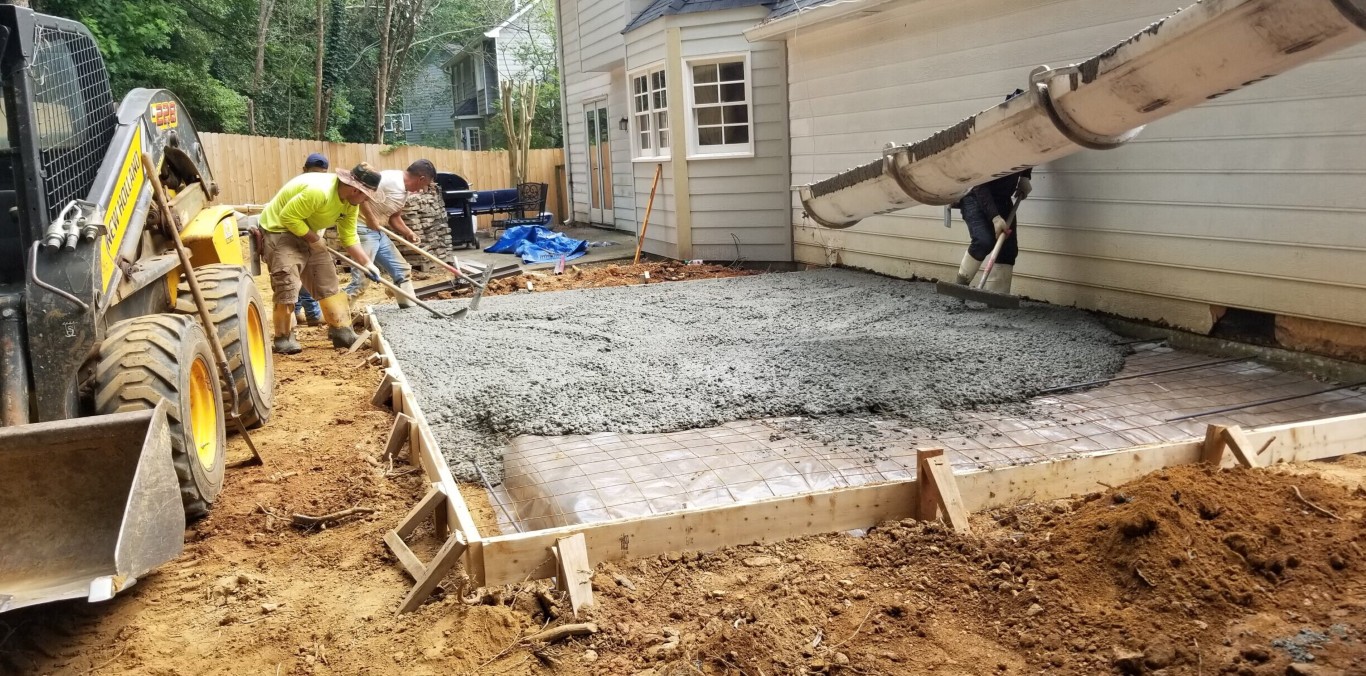
Concrete placement requires attention to detail. We use concrete mixes specifically designed for structural applications. The concrete is placed continuously to avoid cold joints, vibrated to eliminate voids, and finished to proper levels. Forms are carefully constructed and braced to maintain alignment during the pour. After placement, we protect and cure the concrete properly. Building inspectors verify our work at key stages, ensuring everything meets code requirements. This systematic approach delivers foundations that provide reliable support for decades.
Protecting Your Foundation Investment
While foundations are built to last, proper site drainage is essential for long-term performance. Water is the enemy of foundations. We grade sites to direct water away from foundation walls. Gutters and downspouts should discharge at least 5 feet from the foundation. French drains or other drainage systems may be needed in areas with high water tables or poor drainage.
Regular inspection helps catch small issues before they become major problems. Look for cracks in foundation walls or floors. Monitor for water stains or dampness that indicate drainage problems. Check that grading still slopes away from the foundation. Address any issues promptly. Most foundation problems are easier and less expensive to fix when caught early.
If you notice significant cracking, settling, or other foundation concerns, have them evaluated by a professional. Some cracks are normal and don't indicate structural problems, while others require attention. Our repair and restoration services can address foundation issues before they affect your structure. We also work with structural engineers when needed to ensure repairs meet engineering standards.
Planning a Construction Project?
Let's discuss your foundation needs. We'll review your plans, provide expert recommendations, and deliver quality structural concrete work.